I read a post recently about the security reputation of WordPress. In it, the author argues that WordPress mostly has a security reputation problem, not an actual security problem. I disagree, I would argue there are actual problems with the way WordPress is built technically.
My argument for that is simple:
- Defaults matter
- WordPress has insecure defaults.
Let's get into the details.
WordPress has insecure defaults
When a new WordPress developer writes a theme or plugin, they might write the following:
<h1><?php echo $post_custom_title ?></h1>
It's a natural piece of code to write. I want to put this on the page, echo puts thing on the page, I write echo. And now you've made insecure code. Through no fault of your own, you just didn't know of the existence of esc_html. The secure way to write the same code is this:
<h1><?php echo esc_html( $post_custom_title ) ?></h1>
Even if you know what the secure version looks like, it is easy to still write the insecure version. It is like walking in a minefield, any misstep will result in an insecure code path.
What does a secure default look like?
In React the naïve code looks like this:
<h1>{postCustomTitle}</h1>
That is secure by default. Because React escapes everything, any >, " in the content will become an HTML entity. The insecure version of the above example looks like this:
<h1 dangerouslySetInnerHTML={{ __html: postCustomTitle }} />
Everything about the above signals to the user that they should know what they are doing before endevour in this direction. dangerouslySetInnerHTML instantly signals that this is some kind of dangerous operation. Having to put __html as a key in a object, makes it hard to do accidently and the ergonomics of it are annoying. It is friction in the direction of doing the secure thing.
Another benefit of the signal is that the user is more likely to stumble on the educational materials on how to make dangerouslySetInnerHTML secure when you use it. The React docs have this paragraph at the top of the explanation for this prop:
This is dangerous. As with the underlying DOM innerHTML property, you must exercise extreme caution! Unless the markup is coming from a completely trusted source, it is trivial to introduce an XSS vulnerability this way.
It links out to the wikipedia article about XSS, so the developer has a chance to learn about this term and the dangers of it.
WordPress is full of these "insecure by default" paths. So it is no wonder that many plugins are insecure. Solving this by fixing security incidents is a game of whack-a-mole.
Defaults matter
Everyone starts out as a beginner. Literally, when you are born, you know nothing about anything. Gradually you learn about the world. The same is true for new WordPress developers.
Time and time again when companies publish statistics about settings, it turns out 90-95% of people left the setting in the default.
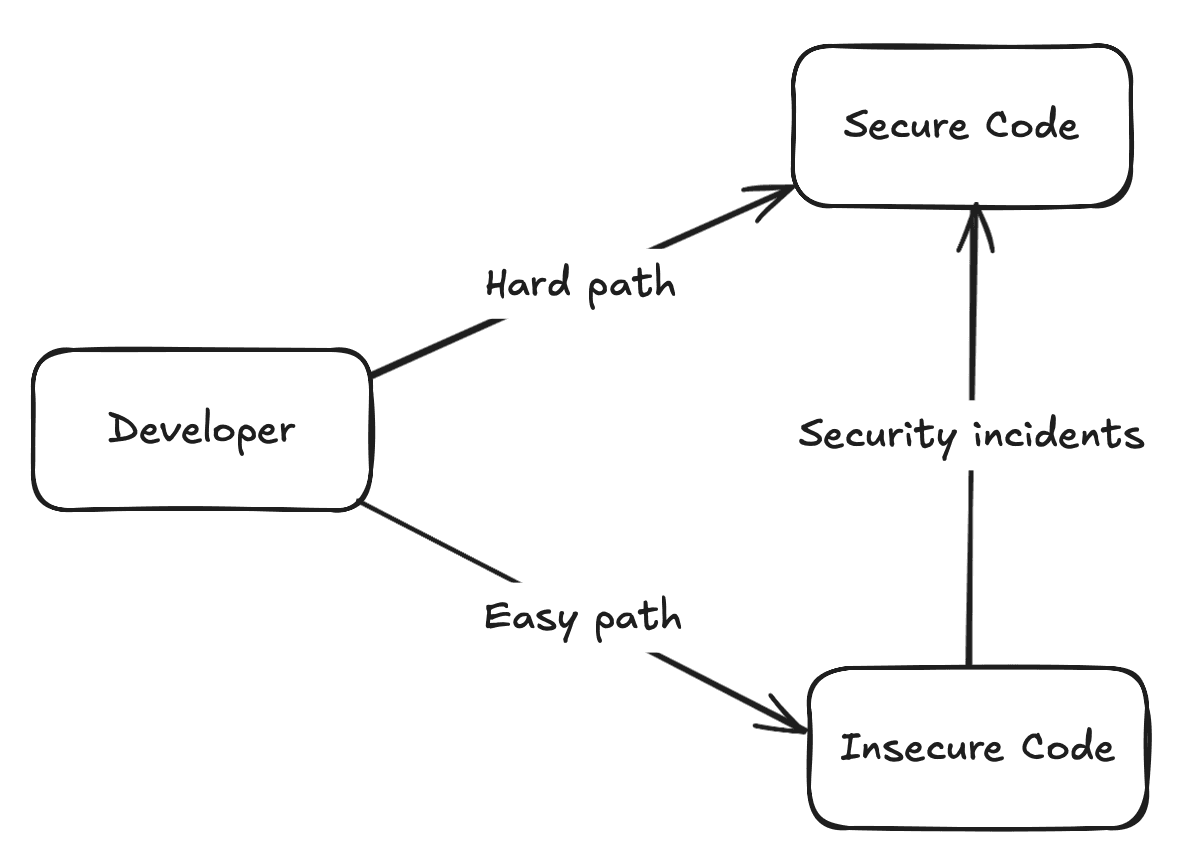
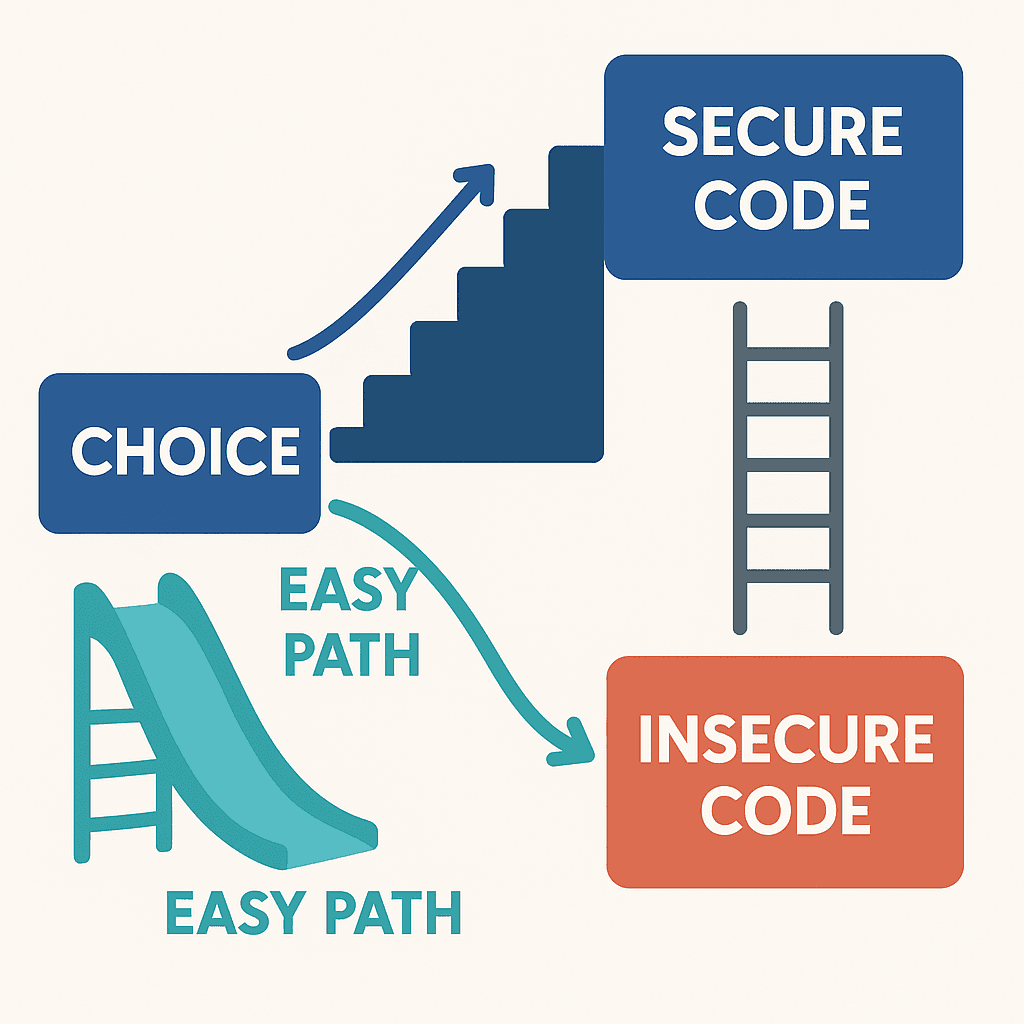
Combined with the above, for WordPress I imagine it to be something like the following picture. Taking the hard path is walking the stairs. The easy path is more akin to sliding down a slide. And when you are at insecure code, usually the only way to get to secure code is by climbing the "security incident" ladder.
For the more visually inclined people, I've asked an LLM to make an illustrated version.
What to do about it?
It's hard to know what to do about this. The WordPress code is vast and it is hard to change defaults now. Implementing something like Blade will alienate a ton of WordPress developers. What we shouldn't do is imply it's merely a reputational or perception problem. While the noise is likely overselling the security issues of WordPress, there are actually problems with WordPress's security hygiene.